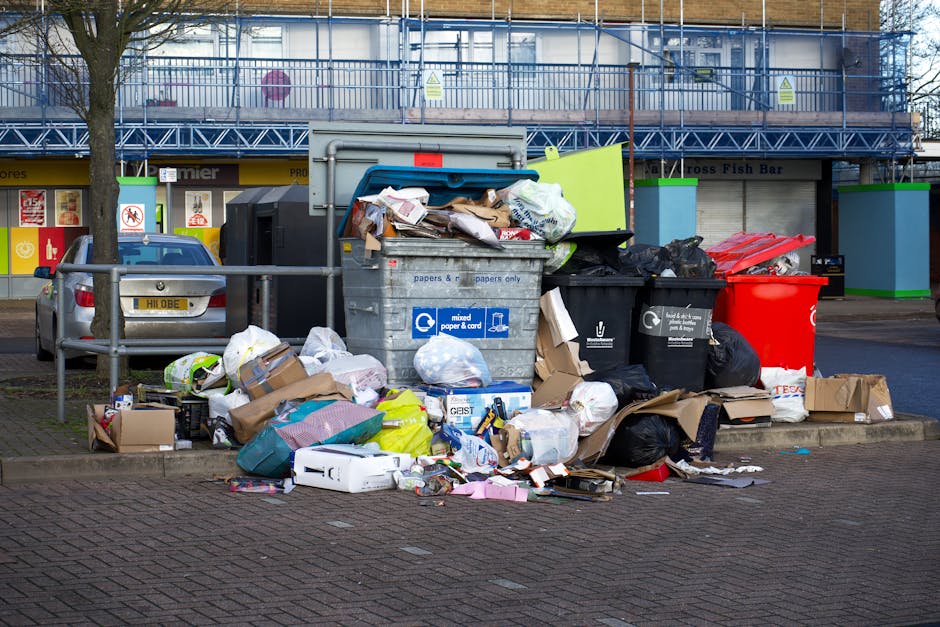
Box Hill rubbish clearance tips for Dorking homes

If you are staring at a garage full of old furniture, a loft packed with "I'll deal with it later" boxes, or a garden pile that has somehow become part of the scenery, you are not alone. Box Hill rubbish clearance tips for Dorking homes are really about one thing: making the job simpler, safer, and less stressful while keeping an eye on space, access, and what can actually be reused, recycled, or removed responsibly. Around Dorking, that often means planning for narrow drives, awkward front paths, and the sort of mixed household waste that builds up quietly over months. Truth be told, most clear-outs are less about heavy lifting and more about good decisions made early.
This guide walks through the practical side of clearing rubbish from Dorking homes near Box Hill: how the process works, what to sort first, where people tend to trip up, and how to avoid turning a straightforward job into an exhausting weekend. You will also find a simple checklist, a comparison table, and a realistic example so you can judge what makes sense for your own place.
Why Box Hill rubbish clearance tips for Dorking homes Matters
Box Hill and the surrounding Dorking area are lovely, but the homes here often come with practical quirks that matter when rubbish needs clearing. Older properties may have smaller entrances, steep paths, shared access, or lofts and garages that were never designed for modern amounts of storage. Even a simple job can become awkward if you have not thought through access, sorting, and lifting in advance.
There is also the everyday reality of mixed waste. A single household clearance may include broken furniture, old carpets, garden cuttings, cardboard, electrical items, and a few bags of general junk. If you treat all of it the same way, you tend to waste time and money. If you sort it properly, the process gets cleaner and more efficient. That is the real value here.
For many homeowners, the first question is not "How do I get rid of this?" but "How do I stop it becoming a bigger job than it needs to be?" Fair question. And around Box Hill, where access and parking can be less forgiving than people expect, that question matters even more.
Expert summary: The best rubbish clearance is usually not the fastest one at the start; it is the one that is planned before anything leaves the house. A little sorting upfront can save a surprising amount of effort later.
If your clearance is part of a wider home project, you may also find it useful to compare it with a broader home clearance or, for bigger property-wide jobs, a more structured house clearance. Those services are often a better fit when the job has spread beyond one room or one vehicle load.
How Box Hill rubbish clearance tips for Dorking homes Works
At its simplest, rubbish clearance works like a sequence: identify the waste, separate what stays from what goes, decide what needs special handling, and then remove it in a way that is safe and compliant. The details change depending on whether you are clearing a loft, a garage, a garden, or a whole property, but the process is broadly the same.
Here is the usual flow:
- Walk through the space slowly. Make a quick inventory of what you have. You do not need a spreadsheet. Just a sensible list.
- Split items into clear groups. Reusable, recyclable, general rubbish, bulky items, and anything potentially hazardous.
- Check access and lifting points. Measure doorways, note stairs, and see whether items can actually be moved without damage.
- Decide what can be donated, reused or dismantled. A table with removable legs is easier to handle than a solid one. Obvious, but easy to forget.
- Arrange the removal method. That could mean a full clearance service, a one-off waste removal, or a specialist option for certain items.
- Clear, sweep, and inspect. Once the waste is gone, a final tidy-up makes the room feel genuinely finished.
For mixed loads, householders often combine general clearance with targeted services. For example, if the problem is mostly old chairs, wardrobes or damaged tables, a furniture clearance or furniture disposal option may be more practical than treating everything as general rubbish.
And if you are looking at a messy garage, fallen branches, or bags of green waste after a long season of neglect, separate handling can help there too. A garage clearance or garden clearance approach is often more efficient than trying to force everything into one generic plan.
Key Benefits and Practical Advantages
Good rubbish clearance is not just about getting rid of stuff. It can improve the use of your home in ways that are easy to feel the moment the space is empty. The house breathes again, if that makes sense. You open a cupboard and do not immediately regret it.
- More usable space: Spare rooms, lofts, and garages become functional again.
- Less stress: Visual clutter has a way of nagging at you. Clearing it removes that background pressure.
- Safer movement around the home: Fewer trip hazards, fewer unstable piles, fewer awkward squeezes through narrow hallways.
- Better sorting for recycling: When items are separated correctly, more can often be diverted from general waste.
- Smarter project planning: If you are renovating, moving, or downsizing, clearance clears the runway first.
There is also a commercial value angle for some homeowners. A cleaner property often photographs better, feels more presentable to visitors, and is simply easier to manage day to day. You may not notice the benefit for an hour, then all at once it hits you: the clutter was quietly draining time and headspace.
Where furniture is bulky or difficult to transport, it is worth looking at both practicality and condition. A sofa with a broken frame may be better handled through dedicated furniture disposal, while anything reusable may deserve a clearer route into a furniture-focused service. Small choice, big difference.
Who This Is For and When It Makes Sense
This kind of clearance guidance is useful for a wide range of Dorking homeowners. It is not just for big refurbishments or end-of-tenancy situations. In fact, some of the most common jobs are the smaller, messier ones that have quietly grown over time.
It makes sense if you are:
- sorting a loft after years of storage accumulation
- clearing a garage that no longer fits a car
- preparing a property for sale or letting
- dealing with a bereavement clearance and need a respectful, methodical process
- tidying after DIY or light renovation work
- making space for a new baby, a home office, or accessibility equipment
- reducing clutter before a move
Some people only realise they need help when they are halfway through and the pile has become physically awkward. That is usually the moment where planning matters most. Let's face it, nobody wants to discover at 7pm on a damp Tuesday that an old wardrobe will not fit through the front door.
Clearance can also overlap with specialist property types. For instance, if you are managing a compact rental, an older converted property, or a top-floor flat, a flat clearance may be more relevant than a standard household tidy-up. Similarly, if you are sorting an attic full of seasonal clutter and forgotten belongings, a loft clearance can save a lot of back-and-forth.
Step-by-Step Guidance
Below is a practical way to approach a Dorking home clearance without making it harder than it needs to be.
1) Start with a room-by-room scan
Begin in one space only. Not the whole house. That is where people lose momentum. Pick the garage, loft, spare room, or garden corner and work through it methodically. If possible, take photos before you start. It helps you see the volume more clearly and keeps the job realistic.
2) Separate items into categories
Use simple groupings: keep, donate, recycle, remove, and possibly hazardous. It does not have to be perfect. It just has to be good enough to stop confusion later. One useful trick is to use different bags, boxes, or labels so the piles do not blur together. They always blur together if you leave them long enough.
3) Remove obvious reusables first
Anything still usable should be moved out early. That includes decent furniture, clean storage boxes, appliances in working condition, and items with resale value. This reduces volume and keeps you from paying to dispose of things that someone else may be able to use.
4) Check for awkward items
Mattresses, wardrobes, broken desks, old exercise equipment, and heavy garden items can cause trouble simply because they are awkward to move. If something needs dismantling, do that before you start carrying it. A few screws removed at the right time can save a bruised wall, or worse, a bruised ankle.
5) Protect the route out of the property
Lay down simple floor protection if needed. Clear hallways. Open gates. Move cars if access is tight. If you have a narrow entrance typical of many homes near Box Hill, the route matters almost as much as the waste itself.
6) Book the right type of clearance
General household clutter usually falls under broader waste removal, while larger or more organised jobs may fit a wider home clearance or a specific room-based service. If the waste comes from trade or renovation work, a builders waste clearance option may be more suitable.
7) Finish with a reset
Once the waste is gone, clean the area properly. A sweep, dust-down, and quick inspection are worth doing. That last 20 minutes is where the job really lands. Otherwise you just move clutter around and call it progress. We have all done it, or at least been tempted.
Expert Tips for Better Results
These are the small, practical habits that make a big difference in real homes.
- Always start with access. If the waste cannot get out smoothly, everything slows down.
- Sort by size as well as type. Large items should be staged separately from bagged waste.
- Keep a "maybe" pile small. Indecision creates clutter faster than you think.
- Watch for hidden mixed materials. Wardrobes, chairs, and cupboards often contain metal fittings, glass, or fixings that affect sorting.
- Think in terms of lifting pairs. Heavy items are far easier and safer with two people.
- Do not fill the hallway early. Leave yourself a clear route for the last and heaviest items.
One practical local observation: in older Dorking homes, you often find items in places that were never meant for long-term storage, like under-stairs voids or cramped loft eaves. If that sounds familiar, you are not being disorganised; you are just dealing with a house that has quietly run out of spare corners.
If you want to keep the process sustainable, look at the provider's approach to reuse and recycling. A service that understands sorting and recovery is usually a better fit than one that simply loads everything into the nearest container. You can also review a provider's recycling and sustainability approach before booking.
Common Mistakes to Avoid
Most clearance problems come from rushing, not from the waste itself.
- Starting without a plan: If you begin moving items before deciding what stays, the job gets messy fast.
- Ignoring access: Tight stairwells, low ceilings, and awkward parking can turn a simple removal into a slow one.
- Mixing hazardous items with general waste: Anything that needs special handling should be separated early.
- Leaving sorting until the end: That usually means more lifting, more trips, and more frustration.
- Overestimating what can be done in one go: A fair few clear-outs need two stages, not one.
- Forgetting what is reusable: You may be throwing away value without realising it.
Another common slip is trying to clear every room at once. It sounds efficient. It usually is not. A focused room-by-room approach keeps momentum and reduces decision fatigue, which is the sneaky little thing that makes people stop halfway through and leave a sofa in the garden for three days. Not ideal.
Tools, Resources and Recommendations
You do not need a van-load of equipment to do this properly, but the right basics help a lot.
- Heavy-duty sacks or boxes: Better than weak bags that split at the worst time.
- Marker labels: Helpful for separating keep, donate, recycle, and remove.
- Work gloves: Useful for broken edges, dust, and hidden sharp bits.
- Dust sheets or floor protection: Handy for narrow hallways and staircases.
- Screwdriver or small tool set: Good for dismantling flat-pack furniture and shelves.
- Measuring tape: Essential if bulky items need to pass through tight gaps.
For bigger or more complicated clear-outs, it often helps to compare specific service types before choosing. A garage full of mixed household clutter may call for a garage clearance. A house containing multiple rooms of mixed items may be better handled as a broader house clearance. If the job involves office furniture or documents from a home office, an office clearance service can be more appropriate.
One more practical recommendation: ask upfront what happens to recyclable materials, and whether the company can handle the type of item you actually have. That sounds basic, but it saves misunderstandings later. It also saves the awkward "oh, that wasn't included" moment nobody enjoys.
Law, Compliance, Standards, or Best Practice
For household rubbish clearance in the UK, the safest approach is to use a provider that handles waste responsibly and in line with accepted industry practice. You do not need to memorise legislation to make a good decision, but you should expect clear handling of waste, sensible sorting, and proper disposal routes.
Here are the points that matter most in plain English:
- Duty of care: Waste should be passed to someone who can handle it properly. If a provider cannot explain what happens next, be cautious.
- Special items: Electricals, paints, sharp materials, and some bulky items may need separate treatment.
- Safe lifting: Heavy furniture and awkward loads should be moved with care and the right number of people.
- Property protection: Good practice includes avoiding damage to floors, walls, doors, and shared access areas.
- Insurance awareness: A reputable provider should be able to explain how they approach safety and liability.
If you are comparing providers, it is sensible to look at their published policies and service standards. Pages such as insurance and safety, health and safety policy, and terms and conditions can help you understand how a company thinks about the work before you book anything.
For anyone handling waste from a business or home office, the expectations may be a bit different. In that case, something like business waste removal or office clearance may be a cleaner fit than a generic household collection.
Options, Methods, or Comparison Table
Different clear-out methods suit different situations. Here is a straightforward comparison.
| Option | Best for | Strengths | Trade-offs |
|---|---|---|---|
| DIY skip or self-load approach | Very large volumes and people with time, transport, and lifting help | Flexible and familiar | Heavy lifting, sorting, transport, and site logistics are on you |
| General waste removal | Mixed household rubbish and regular clutter | Simple and practical | May not be ideal for bulky, specialist, or recyclable items |
| Room-specific clearance | Lofts, garages, gardens, flats, or one problem area | Focused, efficient, easier to plan | Less suitable if the whole property needs attention |
| Full house clearance | Whole-property clear-outs, moves, bereavements, and major resets | Comprehensive and organised | More planning required, especially with access and item sorting |
If the job is mostly furniture, compare that route first. If it is mainly end-of-project debris, a specialist like builders waste clearance may be the more sensible option. Choosing the right method is often where the savings come from, not after.
Case Study or Real-World Example
Picture a typical Dorking semi-detached home near Box Hill. The owners have lived there for years, and the garage has become a holding bay for broken shelving, old sports gear, three faded suitcases, paint tins, and a chair that has not seen a sitting posture since 2016. The loft is similar: boxes, seasonal decorations, a duplicate kettle, and a few items they kept "just in case."
Rather than attacking everything in one go, they start with the garage. They make three piles: keep, donate or reuse, and remove. The furniture goes first because it is bulky. The garden waste is separated from general junk. Then they clear the route out of the property before moving the heavier bits. That single decision saves time and avoids the usual hallway bottleneck.
By the end of the day, the garage is actually usable again. The loft is still on the list, but the job no longer feels impossible. That is the practical difference between a rushed clear-out and a thought-through one. Not glamorous. Very effective.
If the owners had skipped the sorting stage, they would probably have spent longer loading, re-loading, and debating what belonged where. Small decisions early saved them the sort of frustration that only shows up when you are already tired.
Practical Checklist
Use this before you book or begin.
- Identify the main clearance area: loft, garage, garden, spare room, or whole house
- Separate reusable items from rubbish
- Set aside anything that may need special handling
- Measure narrow doors, stairs, and access points
- Make sure the route out of the home is clear
- Decide whether furniture needs dismantling first
- Choose the right type of service for the waste you have
- Check whether the provider explains sorting, recycling, and disposal clearly
- Keep valuables, documents, and sentimental items out of the clearance pile
- Do a final sweep and visual check after removal
Quick takeaway: If you can sort the items before removal day, the rest of the job becomes noticeably easier. That is the bit most people underestimate.
Get a free quote today and see how much you can save.
Conclusion
Box Hill rubbish clearance tips for Dorking homes are really about making sensible choices before the first bag is lifted. Start with access, sort the waste properly, separate what can be reused, and choose the right service for the job in front of you. Do that, and the whole process becomes calmer, cleaner, and much more manageable.
Whether you are clearing a garage, making room in the loft, or dealing with a bigger household reset, the most reliable approach is still the simplest one: plan well, lift carefully, and keep the route clear. No drama needed. Just a proper job done properly.
If you want to know more about the company behind these services, you can also visit the about us page or use the contact us page to ask about your specific clearance needs.
Frequently Asked Questions
What is the best way to start a rubbish clearance at home?
Begin with one room or one area only, then sort items into keep, donate, recycle, and remove. Starting small keeps the job realistic and stops the clutter from spreading across the house.
How do I know whether I need a full house clearance or a smaller service?
If several rooms are involved or the whole property needs emptying, a broader house clearance is usually the better fit. If the problem is mainly one area, such as a loft or garage, a room-specific service is often enough.
Can furniture be removed with general rubbish?
Sometimes, but not always in the most efficient way. Large or reusable items are often better handled through a furniture-focused service, especially if they are bulky or awkward to carry.
What should I do with broken items that are still heavy?
Separate them early and check whether they need dismantling. Heavy broken items can be surprisingly awkward, so it helps to plan the route out of the property before moving them.
Is it worth sorting items before the clearance team arrives?
Yes, absolutely. Sorting beforehand usually makes the job quicker, reduces confusion, and can help ensure recyclable or reusable items are handled more appropriately.
How do I prepare a tight hallway or narrow staircase for clearance?
Clear the route, move fragile items out of the way, and consider floor protection if needed. If possible, measure the widest points in advance so you know which items may need dismantling.
What kinds of waste need extra care?
Electrical items, paint, sharp materials, and anything that could leak, break, or cause injury should be treated carefully. If in doubt, separate it and ask about the right handling approach.
Can I combine garden, garage, and household clutter in one clear-out?
Yes, but keep the categories separate when you sort them. That makes it easier to decide what can be recycled, reused, or removed as general waste.
How can I avoid paying for a bigger clearance than I need?
Do a quick inventory first and remove anything reusable before booking. A more focused load often means a more efficient and better-value service.
What should I look for in a trustworthy clearance provider?
Look for clear explanations of how waste is handled, sensible safety information, transparent pricing guidance, and straightforward terms. Those are usually better signs than fancy promises.
Do I need to worry about safety when clearing out an older home?
Yes, a little caution helps. Older homes can have narrow access, uneven flooring, or loft spaces that make lifting more difficult. Slow and steady is usually safer than trying to rush through it.
Where can I find information about pricing and policies before booking?
It is sensible to review pages like pricing and quotes, payment and security, and the company's policy pages so you know what to expect before confirming anything.